Corn silage is one of the most valued feeds on livestock farms, but it can also be vulnerable to one of the biggest hidden threats to forage quality and animal well-being: mycotoxins.
Mycotoxins are released by microscopic fungi that can develop during silage production and storage, meaning that if silage making is not effectively managed, animal health, fertility, and milk production can all be at risk – reducing overall farm profitability.
The challenge for producers is that mycotoxins are a natural part of the farm environment. While they can’t be eliminated completely, the risk of mycotoxin contamination can be reduced with good crop management and silage making practices.
Why Are Mycotoxins Such a Problem in Corn Silage?
Mycotoxins are secondary metabolites that are mainly produced by molds from the genera Fusarium, Aspergillus and Penicillium.
When animals consume silage contaminated with mycotoxins, it can affect both well-being and productivity. Common consequences of contamination include reduced feed intake, lower milk production, reproductive problems and, in severe cases, death.
In cattle, mycotoxins can cause lactic acid to build up, increasing the risk of Sub Acute Ruminal Acidosis (SARA).
It’s also important to note that certain mycotoxins can be transferred from livestock into associated animal products, creating a food safety hazard.
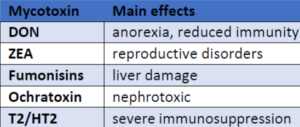
Problems arising from some of the most common mycotoxins in corn forage
How Do Mycotoxins Develop?
The risk of mycotoxins begins long before the crop reaches the clamp.
- 70-90% of the risk from mycotoxins occurs in the field
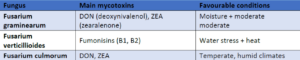
The genus Fusarium is responsible for the majority of mycotoxins produced before harvest. Certain corn cultivars, together with factors like abiotic stress, insect attack and late harvesting, can all make crops more susceptible to infection.
Problems from fusarium based mycotoxins
How to minimize the impact of mycotoxins from the field
- Choose Fusarium-tolerant corn varieties
- Prioritize insect management (especially leaf rollers)
- Practice crop rotation
- Harvest at the right stage (typically 32-35% DM)
- Minimize soil and impurities at harvest
- Choose the appropriate cutting length
Preventing Mycotoxin Contamination in the Silo
One of the biggest challenges with mycotoxins in corn silage is that they aren’t necessarily spread evenly throughout the clamp. Some areas are much more likely to contain higher levels than others, notably the top of the silo, around the edges, and in areas that haven’t been compacted properly.
As fermentation doesn’t destroy most mycotoxins, the organic acids produced during ensiling will have little effect on most types. For example, while Fusarium generally stops growing under anaerobic conditions, other mycotoxins like Ochratoxin A, Mycophenolic acid, and PR toxins (Penicillium roqueforti) may take hold inside the clamp.
Once forage is in the silo, the objective is to promote rapid fermentation and an efficient drop in pH (to below 4). This helps improve stability once the clamp is opened and reduces the growth of secondary molds during storage. While this will not eliminate any mycotoxins already present, it can help limit further mold development and protect silage quality.
The best ways to minimize mycotoxins in the silo are to fill the silo as quickly as possible, achieve optimum compaction (more than 220 kg DM3), and ensure a watertight covering.
Using a forage inoculant based on Lentilactobacillus buchneri and Lentilactobacillus hilgardii combination can also help reduce the temperature and minimize the incidence of storage-related molds that produce mycotoxins.
Good storage practice is essential to minimize the contamination risk.
Risk factors associated with mycotoxins in the silo

Mycotoxin Control During Feedout
Feeding silage at a rate that prevents heating and spoilage and minimizes damage to the exposed face area is key to controlling mycotoxin development during feedout.
Minimize the risk of infection by:
- Maintaining a straight, clean silo face where possible
- Removing silage at the optimal rates to minimize risk
- In winter: 10-15 cm/day
- In summer: 20-30 cm/day
- Discarding all spoiled or mold-contaminated silage
Can You Spot Mycotoxins in Silage?
Visible mold is always a warning sign, but it’s only part of the story.
- Silage doesn’t have to look moldy to contain harmful levels of mycotoxins
One of the factors that makes controlling harmful mycotoxins difficult is that they can be present even when molds are not visible. This means silage may look acceptable but can still contain dangerous toxins.
When there is some mold present, it’s also important to remember that the color or level of mold infestation does not reflect the level of mycotoxin contamination. While mold is one of the visual signs of mycotoxin risk (along with areas of overheating, and unusual odors) – it is essential that professional analysis is used to confirm the presence of harmful toxins to safeguard the herd.
The key aspect of mycotoxin control is ensuring the initial outbreak is managed quickly and effectively, by confirming levels through silage testing for multiple mycotoxins and taking immediate action to minimize the risk to animals.
Testing for Mycotoxins in Silage
The starting point for testing is ensuring that a representative sample is collected. Best practice is to take samples from various places within the silo and have them tested for multiple types of mycotoxins.
Common mycotoxin screening tests for silage
- Enzyme-Linked Immunosorbent Assay (ELISA) – a rapid, cost effective and highly sensitive method used to detect and quantify mycotoxins.
- High-Performance Liquid Chromatography (HPLC) and Liquid Chromatography-Mass Spectrometry (LC- MS) – analytical laboratory procedures that can measure the exact concentrations of mycotoxins in forage crops.
How to Manage Mycotoxin Contamination In Corn Silage
Acting quickly is the first line of defence against mycotoxins.
Where possible, remove the contaminated silage from the ration altogether. If that’s not practical, reduce the amount being fed by diluting it with clean, high-quality forage.
Always ensure the overall ration remains nutritionally balanced and provides adequate levels of antioxidants. Using a proven mycotoxin absorbent can also help reduce the impact when managing contaminated forage.
Mycotoxins: The Bottom Line
Mycotoxins are an unavoidable challenge in corn silage farming, but they don’t have to compromise forage quality and herd performance. By combining good crop husbandry, careful harvesting, effective fermentation, and excellent clamp management, farmers can minimize mold growth, reduce the risk of mycotoxin contamination and produce high quality corn silage that supports healthy and more productive livestock.