


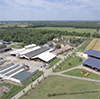
Purpan Engineering School
Educational institution
“From now on, we intend to treat our grass and wholecrop mix silage with MAGNIVA Platinum to guarantee a high quality silage that our cows and heifers can use.”
Farm: Purpan Engineering School
Location, Year: Domaine de Lamothe, Seysses, France
Farm Size: 229ha, 105 dairy cows
Inoculant used: MAGNIVA Platinum ((L. hilgardii CNCM I-4785 and L. buchneri NCIMB 40788)
“We increased the forage diversity grown on farm and optimised our silo storage areas by improving the preservation quality in silo.” Cultivation: 229 ha including 50 ha of completely irrigated maize for silage, 16 ha of wholecrop mix silage (oat, pea, vetch, and triticale), 15 ha of alfalfa hay, 10 ha of corn grain, 6 ha of grassland for hay for 105 dairy cows (DC) producing 31 or 32 kg Workforce: 4 people Ration: DC: Maize silage/grass silage/alfalfa hay/soya/corn grain/ DC 3 l structure and 70/30/mineral mix with LEVUCELL SC Biogas activity: Micromethanation (prototype) + teaching activity (welcoming student engineers and trials for scientific publications by the teacher-researchers at the Purpan school) Objectives: To increase interaction with the public and training organizations Do you treat your grass and maize silos? If so, please indicate the quantity produced and treated/year- Previously no inoculants were used
- In 2020, 550 tons of maize at 36% DM was produced and stored in 1 silo. Yield was 18 tonnes DM/ha
What type of silage additive do you use?
Trial carried out with a MAGNIVA Platinum 1 silage inoculant.What were the reasons for this choice? Who recommended them to you?
- They were suggested to us by the Lallemand team with whom we have previously carried out both trial and training with other products with the teaching and student teams.
- In 2019, the silos were renovated, and we needed a little more flexibility with the silo to open and utilise silage earlier than normal, within 15-20 days with a rapid opening for one of the maize silos.
- We regularly carry out nutritional trials on the herd and did not fully understand that the nutritional quality of silage can change after opening if not stable. With this, we realized we ran the risk of falsifying our trial results.
- The maize harvested in 2018 had very high dry matter and the stability in the silo was poor. This resulted in silage losses and poor animal performance.
- Finally, Lallemand made us aware of the fact that we were regularly in contact with the public and that the treatment of silage (to limit the physical and nutritional losses of our silages) was fully compatible with our approach towards limiting the carbon footprint of our operation Producing more milk with the smallest possible land area and enhancing the nutritional value of our silage to limit the purchase and transport of raw materials by road (or on boats for soya).
Have you noticed an effect on the visible losses? (e.g. due to mould)
- On a full silo of 550 tons, we only had to sort the equivalent of 2 barrow loads.
- We returned 198 tons of DM (or 192,000 Feed Units for Lactation (FUL), to the silo and tried to enhance the value as much as possible and to transform these FUL into milk (5% acceptable loss but no more because maize is expensive to produce)
Has the reduced/eliminated need to sort moldy parts resulted in any time-saving?
- Emptying now only takes us about 30 minutes per week.
- We used to have to sort manually before emptying the silo to ensure the distribution of a visibly healthy silage
- The silage did not turn orangey-yellow like normal and kept its initial color.
What have been the main benefits you have seen since using MAGNIVA Platinum?
- As a result of the minimum losses observed in our silos, we can now fine-tune our crop rotation so as not to attribute excessively large areas of land to the animals.
- If we free up some areas, we will certainly have a little more silage used in the biogas plant.
- It should be pointed out that, for years, we had to purchase silage from outside to feed our animals. This is no longer the case.
Since using MAGNIVA Platinum, have you noticed any benefits, such as improved palatability, nutritional and energy values?
- We have noticed much less silage left in the trough, less sorting even under the conditions in September and October when the ambient temperature was still rather high in our region. Also, after distributing the silage, we noticed it cooled rapidly (although the residual heat that we had measured since the ensiling day remained high for 4 months).
- We carried out some aerobic stability tests (period in which the silage remains at a temperature of less than 2 degrees above ambient temperature) and the silage removed from the silo took 4 days before warming up and thus deteriorating.
- Some nutritional and microbiological tests were carried out from the day of harvesting and every month until the end of ensiling and the FU, DM, Nt and ingestion values remained at a very high level (0.97 FUL). The cows had a constant supply of energy throughout the feedout duration (a rich, palatable silage is the key to success).
- Even though, upon harvesting, our silage presented a very large fermentation challenge due to high levels of yeasts being detected.
- However, on opening, the silage was of high quality and no spoilage, wastage or heating was apparent.
- Our cows did not suffer any health problems (good cellular levels, regular ingestion and milk produced in large quantities).
- This naturally led to high performance levels during a year in which our number of dairy cows was relatively limited.
Have you noticed an effect on your milk production (quantity and quality) and animal health?
We already used Lallemand live yeasts to try to obtain the highest possible nutritional value and degree of gastrointestinal and immunological safety. Throughout the use of the silo, the performance levels were very high: 32 kg of milk on average and high fat content (41.5 to 42) and, above all, 34 of protein content (with a record for us of 35.5 in November). The cow pats were more regular than usual and the cellular levels were normal.What are the main daily benefits from using your treated silage?
- It is extremely important for us not to waste time sorting the silage and removing any fodder left by the cows. We opened the silo for the first time, 20 days after ensiling, and the herd did not suffer any negative consequences (the silo was already stabilized (pH<4). More importantly, the silage cooled quickly after removing from the silo. Retained heat in the silo was 19 degrees higher than ambient, which was the temperature of the maize upon ensiling as measured by temperature sensors integrated in the silo.
- From now on, we intend to treat our grass and wholecrop mix silage with MAGNIVA Platinum to guarantee a high quality silage that our cows and heifers can use to the full, whatever the harvesting and DM conditions are like.
- For us, high quality silage represents a guarantee that the results of the tests carried out by the teaching and scientific teams will not distorted results in any way.
- The solution implemented by the contractor equipped in 2019 with a new Shredladge fodder harvester has been extremely successful (no shortage or remaining product upon completion of the work). For this, he used the new Lallemand mobile application to regulate his machine.
How did you, together with Lallemand, assess your silo making practices and aerobic stability of your silage uponopening the silo?
Firstly, a complete audit of the silo was performed every month until the end of fermentation. Then , two stability tests in polystyrene boxes to measure how long it took for the silage temperature to change (4 days to see the silage temperature change: measured using sensors inside the boxes).
Read more

Samuel Goering
Seed dealer
“You can speed up fermentation, reduce dry matter loss and end up with a better product to feed to the cows. I want to preserve what I’ve got.”
Name: Samuel Goering
Location: Dayton, Virginia, USA
Size: 230 Holstein cows and 240 replacement heifers
Inoculant: MAGNIVA Silver
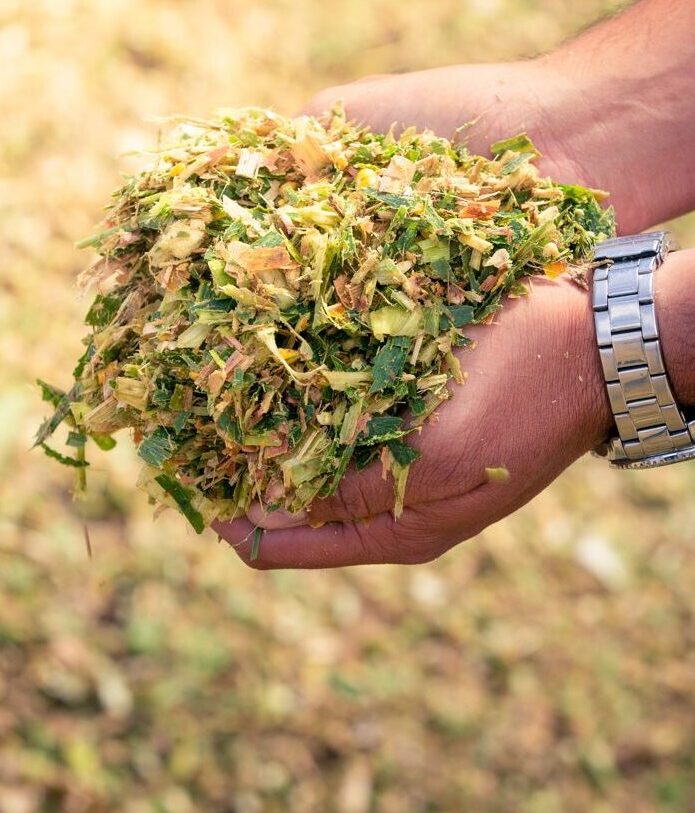
Samuel Goering is an expert at seed selection for his corn, barley and triticale farm near Dayton, Va. As a King’s AgriSeeds dealer, he chooses hybrids and products tailored to forage production and plants staggered maturities to widen his harvest window. He milks 230 Holstein cows and runs about 240 replacement heifers with his son, Conrad, who has been a full-time partner for about five years. They harvest the farm’s corn acres on their own — all of which becomes silage destined for the dairy herd and stored in upright silos and bags. In the spring, they put up triticale silage and soft-dough barley silage, which are stored in bags. “The greatest challenge is in the spring where we have a shorter harvest window on maturity. We don’t want it to go too long in the field. Rain can delay us enough to lower the quality,” Samuel said. “Last year, we had a drought in the summer. We ended up having to buy a fair amount of feed.” Protecting value Samuel used inoculants to help protect his forage investment for many years. He experimented with applicators, dry inoculants and water-soluble products. He found the best combination for his operation is his current set-up: a dry, granular inoculant combined with a Dohrmann Enterprises applicator, installed on the silo blower and bagger. This pairing allows harvest flexibility and fast application. For the past three haylage crops, Samuel used MAGNIVA Silver forage inoculant to help prevent butyric acid production and made sure the crop was packed well, to remove air pockets that can cause spoilage. “Previously, we used other products with mixed results. With MAGNIVA, we are seeing consistent quality forage coming out of our silos and bags,” he said. “There were times we would have problems staying ahead of the heat that would go through the bag as fast as you could chase it. MAGNIVA Silver gives us more up-front fermentation and a little more protection at the time of feedout when that face the bag or silo is exposed to air.” Managing against loss As previously noted, the Goerings also make sure the crop is well-packed to help eliminate pockets of air. They also use a quality covering film to help prevent oxygen exposure during early fermentation and storage. Oxygen stimulates yeast and mold activities, which can result in spoilage losses, refusals or even production and health problems in the herd. “You don’t want to put moldy feed in front of a cow,” he explained. “We feel like we are feeding a much better product than if we were not using an inoculant. We are feeding some purchased silage right now, and we can’t wait to get back to our own feed.” Starting with good forage is key to achieving Samuel’s goal of feeding quality silage that retains as much value as possible and reduces the need for purchasing feed and supplements, which can lower the farm’s overall profitability. “You want to preserve that forage,” he said. “The inoculant will not make the crop any better than the day it was chopped, but you want to preserve it. You can speed up fermentation, reduce dry matter loss and end up with a better product to feed to the cows. I want to preserve what I’ve got.”
Read more

Vander Groef
Dairy producer
“With stable forages, we don’t get heating in the feed bunk — especially in the summer months.”
Name: Vander Groef
Location: Northern New Jersey, USA
Size: 100 Holstein cows
Inoculant: MAGNIVA Titanium
Jeff and Tracy Vander Groef milk about 100 Holstein cows in Northern New Jersey. Just an hour from New York City, the farm is a true family operation. Two of their sons joined the operation full time and a third is working part time while finishing high school. To help control costs, the family focuses on keeping feed expenses down by feeding mostly forages they produce themselves. In good growing years, the Vander Groef family can sell extra forages. “We grow more than we need in a good year,” Jeff Vander Groef said. “This year was one of those tougher years. We had a very serious drought. We had to chop half our grain corn for silage in order to have enough silage. Thus, forcing us to have to buy enough other corn to make enough high moisture corn (HMC) to feed.” In addition to HMC, he grows alfalfa and grass for haylage. Haylage isn’t an easily fermentable crop, which led Vander Groef to change his approach to ensiling and focus on management to help maintain quality. He switched to bunker silos, always uses a forage inoculant and covers with a weather- and oxygen-barrier to prevent spoilage and minimize losses. This focus on reducing waste helps the family ensure better quality haylage at feed out and retain as much quantity as possible to help reduce purchased feed costs. The Vander Groef family also runs a King’s AgriSeeds dealership, which helps in sourcing corn varieties. He selects seeds that have good digestible fiber when planting, and then focuses on ensiling management to minimize dry matter (DM) losses. Microbial inoculation for protection In previous years, the farm applied propionic acid to HMC at ensiling. The HMC continued to heat during the summer, and the Vander Groefs battled mold issues. Searching for solutions, he tried MAGNIVA Forage Inoculants from Lallemand Animal Nutrition three years ago and treated one bag as a test. “We had excellent results,” Vander Groef said. “The silage stayed very cool in the bag, and we had no issues with mold. It made me a believer. This year, we chopped a lot of drought-stressed corn and treated everything. We wanted to eliminate possible issues with forage that wasn’t top quality to begin with.” He applied MAGNVIA Titanium to all 2022 forages. The inoculant contains Lactobacillus buchneri NCIMB 40788 and high-activity enzymes. The high-dose rate L. buchneri NCIMB 40788 is the only silage inoculant reviewed by the US Food and Drug Administration (FDA) to allow claims for improved aerobic stability. The farm milks twice a day and feeds once a day, making bunk stability important. “With stable forages, we don’t get heating in the feed bunk — especially in the summer months,” Vander Groef explained. “That feed is in front of the cows until the next afternoon, so you want to make sure the forage is good and stable. In the summertime, the bunk can heat up. Then you lose intakes. Stable forage that is still cool 22 to 24 hours after it’s put in the bunk is the other piece of the puzzle that’s worth the investment.” The past year, Vander Groef noted his herd’s overall reproductive efficiency improved. “There are so many things that can factor into that, but I’m happy to eliminate mold issues in the feed as one potential cause,” he said. “Inoculant isn’t cheap, but it’s worth it. With recent growing conditions, we haven’t had the best forages going in. We have to protect whatever quality we have.”
Read more
